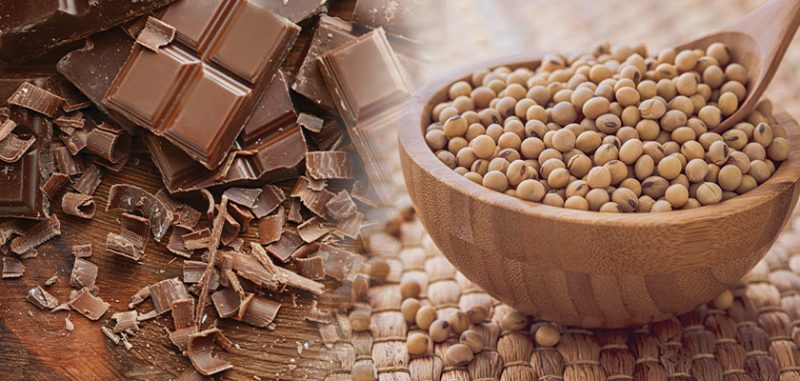
Soy lecithin is a common ingredient in commercially-manufactured chocolate. But what does soy lecithin in chocolate do, and why is it there? Chocolate expert Simon Knott discusses soy lecithin and its role.
Soy lecithin is used as an emulsifier in chocolate, and soy lecithin chocolate recipes have been used consistently by manufacturers since the 1930s. The improved workability of the chocolate and the considerable cost savings granted by soy lecithin, over cocoa butter, have made them a winning combination.
Lecithin is an emulsifier and food additive, which is used in numerous food products, which need stabilising. It’s possible to find soy lecithin in chocolate, baked goods, dressings etc. Most lecithin is still derived from soybeans, however, as soya is a major allergen, sunflower lecithin is starting to take its place as a soy-free, non-GMO alternative for those with allergies or dietary preferences.
The role of soy lecithin in chocolate
Soy lecithin is used in chocolate as an emulsifier
With a high fat content, it’s no surprise that lecithin isn’t very soluble in water. However, it is an excellent emulsifier, which means it can reduce the tension between molecules of fat and water in a mixed solution.
Fat and water molecules don’t naturally mix because the bonds holding the molecules together don’t permit any attraction. However, when lecithin is added to the fat and water solution the size of the fat droplets reduces so much that the solution becomes an emulsion.
This means that the tiny droplets of oil suspended in the liquid appear as a uniform mixture and the oil droplets won’t clump and revert to large ones.
How does soy lecithin emulsify chocolate?
Chocolate is a suspension of tiny particles of cocoa solids, cocoa butter, sugar, lecithin, and sometimes milk. The solid particles are distributed throughout the cocoa butter, so that when it is heated it melts and flows smoothly.
Lecithin is added to uniformly bind together each of these ingredients, creating the chocolate with the smooth melt-in-the-mouth texture we all love.
Why use soy lecithin in chocolate?
Benefits of using soy lecithin in chocolate
Lecithin is a crucial ingredient in chocolate for several reasons. For home chocolate makers, food-grade liquid soy lecithin is the preferred form as it blends more easily into high-fat chocolate compared to powdered lecithin:
Easier Tempering
Working with and tempering chocolate when it is less viscous is easier. A digital infrared thermometer helps monitor precise temperatures during the tempering process, ensuring proper crystal formation for smooth, glossy chocolate.Adding lecithin to reduce the chocolate viscosity makes it much more workable, so blending it with seed chocolate to temper also becomes more straightforward.
Improved Viscosity and Flow
In commercial chocolate manufacturing, it is vital chocolate has the optimum viscosity and ability to flow when melted. This can be controlled by varying the cocoa butter and lecithin content.For home chocolate makers, a chocolate melting pot or double boiler provides gentle, even heat for working with lecithin-enriched chocolate, preventing overheating and maintaining ideal flow properties.
However, cocoa butter is a more expensive ingredient and so lecithin is used preferentially as more cost-effective. Lecithin also has a secondary effect in that it reduces the friction between the cocoa solid particles, which helps to lower the viscosity of the chocolate as well.
When adding lecithin to your homemade chocolate, precision is crucial—typically only 0.3-0.5% by weight is needed. A digital kitchen scale ensures accurate measurements, preventing the use of too much lecithin which can actually increase viscosity rather than reduce it.
Extended shelf life
Chocolate has both a high sugar content and a negligible water content, creating a longer shelf life. However, if a stable product isn’t created, fat molecules will migrate to the chocolate surface forming a white ‘bloom’ of tiny particles. Although safe to eat it spoils the appearance of chocolate and most customers won’t buy it.
Using lecithin in production helps to bind the cocoa butter molecules along with the other component ingredients. This locks the cocoa butter molecules in place, leaving them unable to migrate to the surface.

How is soy lecithin manufactured?
Soy lecithin was first identified in 1845 by a French pharmacist, Théodore Gobley, who later in the same century gave it its chemical name phosphatidylcholine. Lecithin comes from the Greek, lekithos for yolk, from which it was first derived. Gobley discovered it occurs naturally in human organs, such as the lungs and brain as well as numerous plants, and animals.
Lecithin is a mixture of several fatty compounds, the most important of which are choline and cephalin. Combined, these fats enable emulsions of oil and water to form. Choline is naturally better at emulsifying a small quantity of oil in a large quantity of water, and vice versa for cephalin.
How is soy lecithin processed?
Step 1: Soybeans are dried, baked and crushed
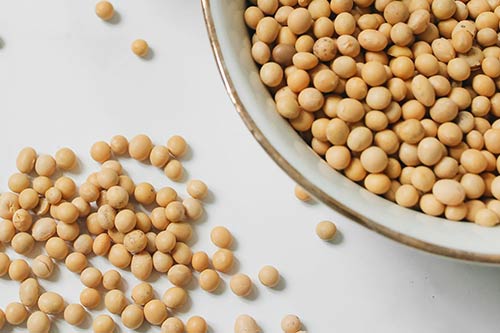
Lecithin is derived from soybeans, which are part of the legume family along with peas, beans, and peanuts. The processing starts by drying and hulling soybeans before lightly baking them (60-88° C) and crushing them into flakes.
Step 2: Lecithin extracted from soybean using hexane, then bleached
The flakes are then mixed with hexane solvents, which extract the soy lecithin. The hexane is boiled off leaving the pure soy lecithin. The lecithin destined for the food industry is finally treated with hydrogen peroxide to lighten its colour.
How to Add Lecithin to Homemade Chocolate
When incorporating lecithin into your chocolate-making process, add it during the final stages of tempering or conching. Heat-resistant silicone spatulas are essential tools for thoroughly mixing the small amount of lecithin into melted chocolate, ensuring even distribution without introducing air bubbles.
The importance of allergen statements by chocolate-makers
After processing, the remaining protein in soy lecithin is very small and so even those who are allergic to soy should be safe to eat it. However, for safety’s sake, lecithin is still classed as a major allergen and needs to be labelled clearly as such.
If you decide to use soy lecithin in your own chocolate-making, make sure you correctly declare it as an ingredient and allergen on your packaging.
Essential Ingredients & Tools for Working with Lecithin in Chocolate
Whether you’re making chocolate from scratch or improving commercial chocolate, these are the key products for working with lecithin:
Lecithin Options:
- Velona Liquid Soy Lecithin 8oz – Food-grade, non-GMO, ideal for chocolate making
- Sunflower Lecithin Powder – Soy-free alternative for those with allergies
Essential Chocolate-Making Tools:
Silicone Spatula Set – For thorough mixing without air bubbles
Digital Kitchen Scale – For precise 0.3-0.5% lecithin measurements
Infrared Thermometer – For accurate tempering temperatures
Chocolate Melting Pot – Gentle, even heat for working with chocolate
Sources:
- Soy Info Center: https://www.soyinfocenter.com/HSS/lecithin1.php
- National Lecithin: https://nationallecithin.com/2021/07/sunflower-lecithin-vs-soy-lecithin-whats-the-difference/ (post unavailable)
This article was original published on 9 December 2022, and updated on 10 March 2025, to improve reader usefulness and helpfulness.